In areas where brown bears move, a wildlife photographer set up camera traps.
The man suddenly became aware that a very odd bear—completely unlike his relatives—had entered the lens as he was going through the records he had just received.
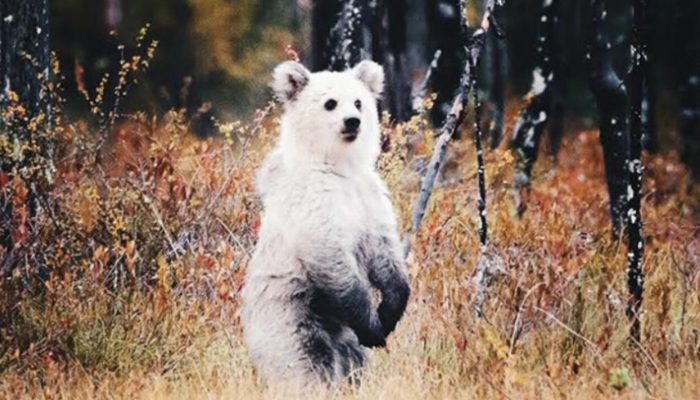
The photographer went to the location where the camera was set up and was able to record a unique forest resident on camera.
On Canada’s west coast, the photographer was taking images in challenging locations. After taking numerous pictures of brown and black bears, a bear that initially appeared to be white entered the frame.
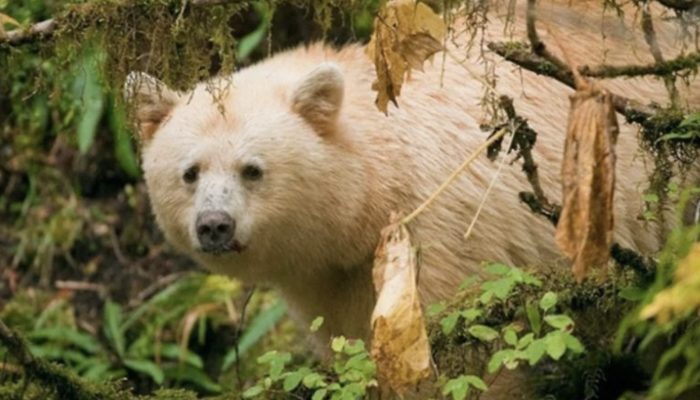
However, the shape of the body and face of the animal was significantly different from the figure of a real polar bear – they also wander here from time to time.
The photographer gave the neighborhood animal protection service the finished photos and video.
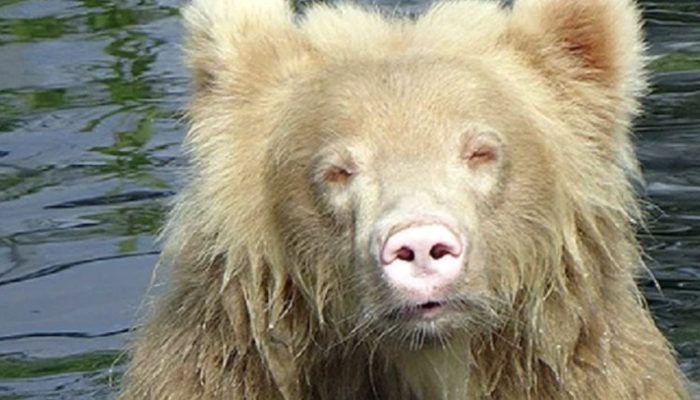
According to experts, it is highly likely that the photographer encountered a rather uncommon Kermode bear. A cub with white fur can be born to two black bears, hence this is not a mutation.
If both parents carry the recessive allele of the color gene, this will take place. In this instance, there is a one in four possibility of a polar bear cub being born. Look at the images the photographer was able to capture.
The number of Kermode bears in the area is steadily increasing. According to some scientists, climate warming is to blame.